
Why Dizziness Persists After a Concussion
One of the most common symptoms people experience after a concussion is persistent dizziness or a sense of imbalance. For some individuals, this resolves within a few weeks. For others, symptoms can persist for months or even years.
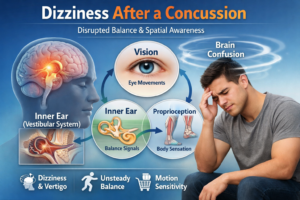
The reason is that dizziness after a concussion is rarely caused by just one system in the body. Instead, it usually involves a disruption in the way the brain integrates information from multiple sensory systems.
These systems include:
-
The vestibular system (balance organs in the inner ear)
-
The visual system (eye movements and visual tracking)
-
The proprioceptive system (signals from muscles and joints that tell the brain where the body is in space)
When these systems stop communicating efficiently, the brain has difficulty maintaining a stable sense of balance and spatial orientation.
Common Symptoms of Post-Concussion Dizziness
Patients with persistent dizziness after a concussion often report symptoms such as:
-
Feeling off balance when walking
-
Motion sensitivity in busy environments (grocery stores, malls, classrooms)
-
Difficulty focusing on moving objects
-
Sensitivity to bright lights or screens
-
Brain fog and cognitive fatigue
-
Dizziness when turning the head quickly
These symptoms are not just frustrating—they can interfere with work, school, sports, and daily activities.
Why Rest Alone Often Isn’t Enough
In the early stages after a concussion, rest is important (24-48hrs). However, once symptoms persist beyond the initial recovery period, the brain often requires targeted rehabilitation to retrain the affected neural pathways.
Without treatment, the brain may begin to rely on compensatory strategies that keep symptoms stuck.
This is where vestibular rehabilitation and functional neurological treatment can play a significant role.
How Vestibular Therapy Helps
Vestibular therapy is designed to retrain the brain’s balance system through specific exercises that target the underlying dysfunction.
These exercises may focus on:
-
Improving eye movement control
-
Restoring balance and spatial awareness
-
Reducing motion sensitivity
-
Reintegrating visual and vestibular signals
-
Increasing tolerance to cognitive and visual load
When these systems begin working together more efficiently again, dizziness and brain fog often improve.
When to Seek Help
If dizziness persists for more than a few weeks after a concussion, it may be beneficial to have a comprehensive neurological and vestibular assessment.
A detailed evaluation can help determine which systems are contributing to symptoms and guide a personalized treatment plan.
Concussion & Dizziness Treatment in Markham
At our clinic, we focus on identifying and treating the root causes of persistent concussion symptoms, including dizziness, visual disturbances, and cognitive fatigue.
Treatment programs are tailored to the individual and may include vestibular therapy, visual rehabilitation, and targeted neurological exercises.
If you or your child are experiencing ongoing dizziness after a concussion, an assessment may help identify the next steps toward recovery.
Book an Assessment
If you are struggling with persistent concussion symptoms, including dizziness, headaches, or brain fog, you can learn more about our concussion treatment in Markham or book an assessment.