
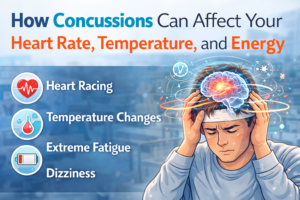
Why Concussions Can Affect Your Heart Rate, Temperature, and Energy
Most people think of a concussion as a brain injury that causes headaches or dizziness.
But many patients experience something different:
-
Their heart races
-
They feel exhausted after small activities
-
They feel worse when standing
-
Their body temperature feels off
-
They feel anxious or shaky for no clear reason
These symptoms can happen when a concussion affects the autonomic nervous system.
What Is the Autonomic Nervous System?
Your autonomic nervous system (ANS) is the part of your brain that controls things you don’t consciously think about.
It regulates:
-
Heart rate
-
Blood pressure
-
Breathing
-
Body temperature
-
Digestion
-
Energy levels
-
Stress response
Think of it as your body’s automatic control system.
Normally this system keeps your body balanced without you noticing it.
But after a concussion, this system can sometimes become dysregulated.
Common Signs of Autonomic Dysfunction After a Concussion
Many concussion patients experience symptoms that don’t seem directly related to the head injury.
These may include:
Heart and Circulation Changes
-
Rapid heart rate
-
Heart pounding when standing
-
Feeling faint when getting up
-
Exercise intolerance
Energy and Fatigue
-
Extreme fatigue
-
Feeling drained after mental tasks
-
Needing frequent rest
Temperature Changes
-
Feeling unusually hot
-
Trouble regulating body temperature
-
Excess sweating
Stress and Anxiety Symptoms
-
Internal tremor or shakiness
-
Feeling “on edge”
-
Difficulty relaxing
Dizziness and Lightheadedness
-
Especially when moving from lying down to standing
Many patients are surprised when they learn these symptoms can actually come from the brain injury itself.
Why Does This Happen After a Concussion?
A concussion temporarily disrupts how different parts of the brain communicate.
Several important brain areas help regulate the autonomic nervous system, including the:
-
Brainstem
-
Hypothalamus
-
Midbrain
-
Prefrontal cortex
If these areas are affected, the brain may have difficulty maintaining balance between the “fight or flight” system and the “rest and recover” system.
This can lead to symptoms like:
-
Heart racing
-
Fatigue
-
Dizziness
-
Stress intolerance
Why Some Patients Feel Worse When Standing
Some concussion patients notice they feel significantly worse when they stand up.
This happens because the brain must quickly adjust blood pressure and heart rate when your body changes position.
If the autonomic nervous system isn’t regulating properly, blood flow to the brain may briefly decrease when standing.
This can cause:
-
Lightheadedness
-
Dizziness
-
Fatigue
-
Brain fog
The Good News: The Nervous System Can Recover
The brain has an incredible ability called neuroplasticity, which means it can adapt and recover with the right type of stimulation.
Treatment for autonomic dysfunction after concussion may include:
-
Gradual exercise therapy
-
Breathing regulation training
-
Vestibular rehabilitation
-
Vision and eye movement therapy
-
Neurological rehabilitation exercises
-
Lifestyle strategies that support nervous system regulation
These treatments help the brain re-balance the autonomic nervous system.
When Should You Seek Help?
You may benefit from evaluation if you experience:
-
Heart racing after a concussion
-
Severe fatigue that doesn’t improve
-
Feeling worse when standing
-
Persistent dizziness
-
Exercise intolerance
-
Temperature regulation problems
These symptoms are very common in concussion patients but are often overlooked.
Specialized Concussion Care
At our clinic we evaluate multiple brain systems involved in concussion recovery, including:
-
Vestibular (balance) function
-
Eye movement control
-
Autonomic nervous system regulation
-
Cognitive processing
-
Sensory integration
By identifying the systems that are not functioning properly, we can develop a targeted rehabilitation plan to help the brain recover.